
At medXteam, the focus is on clinical data. We collect this through systematic literature searches or directly with the medical device as part of clinical trials. We already explained in an article last year how the literature search represents an interface and how the data can be collected digitally. We also act as quality management representatives for our customers and build quality management systems in this context. These can also be digitized, which means that our offering takes us one step further when it comes to digitization and automation.
Abbreviations
MDR Medical Device Regulation; EU Regulation 2017/745
eCRF electronic case report form
EDC Electronic Data Capture
Underlying regulations
EU Regulation 2017/745 (MDR)
Medical Devices Implementation Act (MPDG)
1 Introduction
The medical technology industry has undergone significant digital transformation in recent years. Technologies such as artificial intelligence and the Internet of Things have become driving forces that are revolutionizing the way we develop and use medical devices. This digital revolution also has an impact on the area of quality management, especially in the context of medical devices.
Every manufacturer of medical devices is legally obliged to implement, live and continuously maintain a compliant quality management system (QMS) in accordance with the requirements of EU Regulation 2017/745 (Medical Device Regulation, MDR) and ISO 13485. This QMS forms a crucial pillar to ensure both the safety and effectiveness of the products as well as compliance and adequate implementation of regulatory requirements and legal requirements.
In this digital era, designing a digital technology environment from our quality management system provides the opportunity to drive innovation, efficiency and sustainable improvements to workflows, including optimized efficiency, increased product quality and robust documentation and tracking capabilities.
2. Digitization of literature searches and clinical trials
We successfully implemented the integration of digital technologies over two years ago in the area of literature searches for clinical assessment but also for clinical trials in accordance with Articles 62, 74 or 82 of the MDR.
Digital literature search enables thorough and efficient collection of relevant clinical data necessary to assess the safety and performance of a medical device.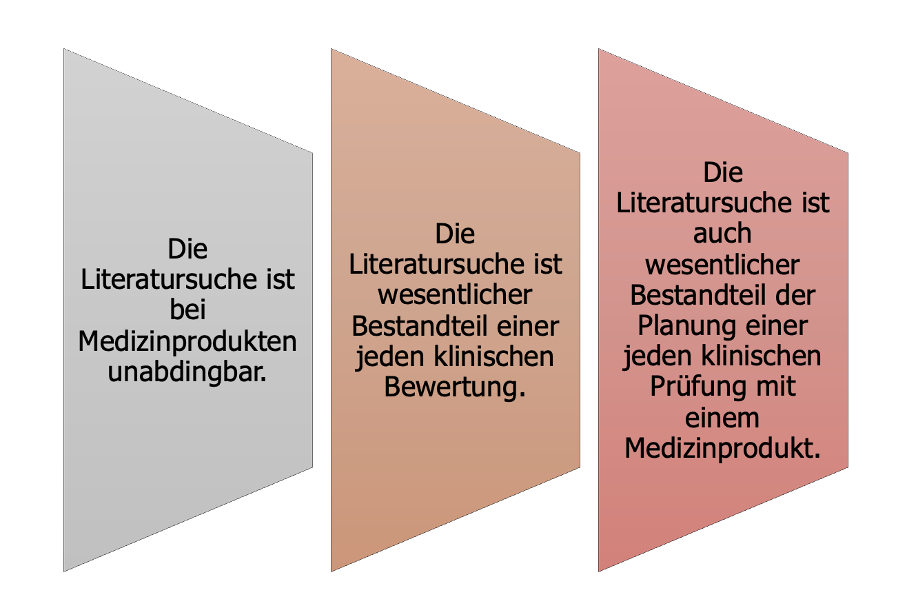
Fig. 1 Literature search in the center
The literature search can sometimes be very time-consuming and tedious. As part of the digitization of the technical documentation, the clinical assessment and therefore in particular the literature search were digitized and the process was automated.
Since medXteam focuses on clinical data, the focus is on literature searches. We implemented this process through our partner avasis as a certified Smart Expert Partner of Siemens Digital Industries Software in the areas of Teamcenter and Polarion.
Digitalization of clinical trials improves data collection, analysis and reporting, ultimately leading to more reliable results and more efficient processes. Through our EDC system from MaganaMed, we offer exactly that by implementing electronic CRFs (eCRF).
With the close integration of the clinical trial (whether for approval, as part of the clinical evaluation, for the collection of product data after it has been placed on the market or as part of a DiGA study) with the process of literature search and thus with the clinical evaluation, digitalization is also essential Clinical trial documents such as: b.
- Clinical trial plan (Appendix XV, Chapter II, Section 3 of the MDR)
- Clinical Investigator's Manual (Appendix XV, Chapter II, Section 2 of the MDR)
- preclinical assessment
possible.
These digital approaches have proven to be extremely valuable and set new standards for transparency, efficiency and accuracy. However, the influence of digitalization goes far beyond these areas. In a regulated environment such as that of medical technology, digitalization offers the opportunity to improve many aspects of quality management.
3. Digitalization in quality management
3.1 Advantages and necessity of digitizing quality management
Digital literature searches and clinical testing are important components of today's research and development process in medical technology. They improve the efficiency and quality of data collection, analysis and reporting. However, digitalization goes even further and has a significant influence on quality management.
It also brings with it numerous advantages: It improves the efficiency of processes, thereby increasing the quality of medical devices and enabling better traceability and documentation. It also enables more efficient management of QMS. This is crucial to comply with ISO 13485 and MDR requirements.
A digitized QMS enables seamless and centralized document management, more efficient and transparent auditing, and improved risk and process management. All of these aspects are of crucial importance in order to ensure not only the requirements but also the high quality of the medical products.
3.2 orgavision and the digitalization of quality management
In the rapidly changing world of medical technology, digitalization of quality management is more than just an option - it is a necessity. With the right tools, medical device manufacturers can make their processes more efficient, improve compliance and ultimately deliver better products for patients.
An example of a tool for digitizing quality management is orgavision . This tool offers a wide range of features that contribute to the digitalization of quality management systems.
With orgavision, companies can digitize and automate their quality management, leading to improved compliance and ultimately higher quality medical products.
orgavision is a good example of a tool that supports the digitalization of quality management systems. The functions of orgavision range from integrated digital document management to a comprehensive event management system (e.g. customer feedback, complaints, corrective and preventive measures).
Orgavision's automation function is particularly noteworthy. An example of this is the automatic update of process names. If the name of a process is changed in orgavision, this name is automatically updated when explicitly linked in all documents in which the process is mentioned. This avoids inconsistencies and misinformation and improves the accuracy and reliability of documentation.
orgavision also offers efficient audit management. Audits can be planned, conducted and monitored, and the results can be easily integrated into the system and analyzed. This facilitates compliance with regulatory requirements and improves the efficiency of the auditing process.
orgavision is therefore a groundbreaking software solution that was developed specifically for the digitization and automation of the quality management system (QMS) in the medical sector. It offers a variety of functions that support the entire QMS process and help increase efficiency. Additional features of orgavision are highlighted below:
Change management: orgavision enables efficient change management by offering a structured process for processing change requests, approvals and implementations. By digitizing this process, changes are quickly captured, tracked and documented, improving control and efficiency.
Complaint management: The tool offers functions for effectively handling customer complaints. This includes collecting, categorizing and handling complaints as well as tracking corrective actions. By digitizing complaint management, companies can respond more quickly to customer feedback, process complaints efficiently and ensure continuous improvement in product quality.
Training: With the help of orgavision, training processes can be efficiently digitized and thus optimized. The training matrix provides a comprehensive overview of the training requirements and the current training status of all employees. You can include individual training elements, such as: B. Set training events, courses or webinars for different employees or employee groups.
Let us now present this example in more detail:
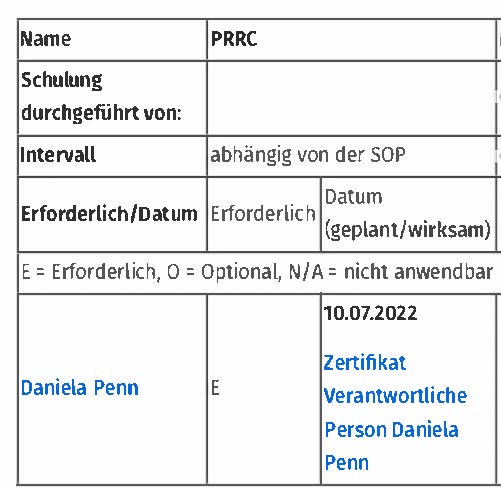
Fig. 2 Orgavision training matrix
Each training can be linked to corresponding competencies, departments or defined roles. This makes it possible to identify exactly which training courses are required for which employees and in which cycle. This systematic and structured approach ensures that no employee misses out on needed training and that all employees always have the necessary knowledge and skills.
orgavision also offers the option of linking and managing training certificates directly in the system. After training has been completed, relevant evidence, such as certificates or confirmations, can be uploaded directly to the system and assigned to the relevant employees.
This evidence can then be accessed at any time and can be exported from the system if necessary. Linking training records not only makes it easier to document and manage training courses, but also to check the training status of individual employees or entire teams.
4. Conclusion
The overall advantages of digitalization are obvious:
- more efficient work
- Target-oriented use of capacities
- Elimination of inefficiencies in the creation, maintenance and change of contents of technical documentation, clinical assessment and literature searches as well as in the area of quality management
- Avoidance of redundantly managed information/documents
- long-term reduction in care costs
By using digital tools like orgavision, companies can improve their quality management processes while ensuring compliance.
The above-mentioned functions of orgavision enable comprehensive digitalization and automation of the QMS. This results in improved efficiency, accuracy and compliance. The central management of documents, the automation of workflows and processes as well as the digitalization of change management, complaint management and supplier management help to optimize quality management processes and meet the requirements of ISO 13485 and MDR.
In summary, it can be said that digitalization in quality management creates simplifications in the course of digitalization, solves redundancies and is therefore an absolute necessity in the long term. With the right tools and strategies, digitizing quality management can lead to more efficient processes, better compliance and ultimately higher quality products.
5. What we can do for you
If a clinical trial is to be carried out, basic safety and performance requirements must first be met and essential technical documentation must therefore be created.
In addition, all medical device manufacturers require a QMS, including when developing Class I products.
The clinical trial leads to the clinical evaluation, which in turn forms the basis for PMCF activities (including a PMCF study).
We therefore support you throughout your entire project with your medical device with primary reference to the clinical data on the product: from start to finish.
6. How we can help you
At medXteam we clarify whether and if so which clinical trial needs to be carried out under what conditions and according to what requirements during the pre-study phase: In 3 steps we determine the correct and cost-effective strategy in relation to the clinical trial required in your case Data collection.
We also provide support in the areas of development strategy, technical documentation and quality management.
Do you already have some initial questions?
You can get a free initial consultation here: free initial consultation