
The medXteam GmbH blog series now begins with an overview of the different types of clinical trials that are possible for medical devices. These will then be described in more detail in the following episodes.
Types of clinical trials involving medical devices
1 Introduction
EU Regulation 2017/745 (Medical Device Regulation, MDR) emphasizes the need for medical device manufacturers to systematically collect and evaluate clinical data before and after approval of their products. Many manufacturers are unaware of the importance of clinical data in demonstrating the compliance of their products. This affects both the approval of the products and the “post-market activities”, in particular the “post-market clinical follow-up”.
In Article 2 (48) “Definitions” the MDR defines the term “clinical data” in more detail:
"Clinical data means information about safety or performance obtained during the use of a product from the following sources:
-
clinical trial(s) of the product in question,
-
clinical trial(s) or other studies reported in the scientific literature on a product whose similarity to the product in question can be demonstrated,
-
in peer-reviewed scientific literature published reports of other clinical experience either with the device in question or with a device whose similarity to the device in question can be demonstrated,
-
clinically relevant information from post-marketing surveillance, in particular from post-marketing clinical follow-up."
The MDR cites clinical trials as the first source. These will therefore continue to play an important role in the future. The following definition can also be found in the MDR:
"Clinical trial" means a systematic investigation involving one or more human subjects and conducted to evaluate the safety or performance of a product."
(Source: MDR, Article 2, Paragraph 45)
2. Types of clinical trials
All clinical studies with medical devices are clinical trials.
A distinction is made between the following types:
- Basic research - other clinical trials (MDR Article 82)
- Pilot study/approval study: clinical trials to demonstrate the conformity of products (MDR Article 62)
- PMCF study: clinical trials related to products bearing the CE marking (MDR Article 74)
In addition, there is now the so-called DiGA study specifically in Germany:
- Study with a digital health application ( DiGA ) to demonstrate positive care effects to achieve reimbursement status.
- d. R. with CE marked medical device: PMCF study
- If planned into the approval process, an approval study is also possible
(Sources: DiGAV, DVG, DiGA guidelines)
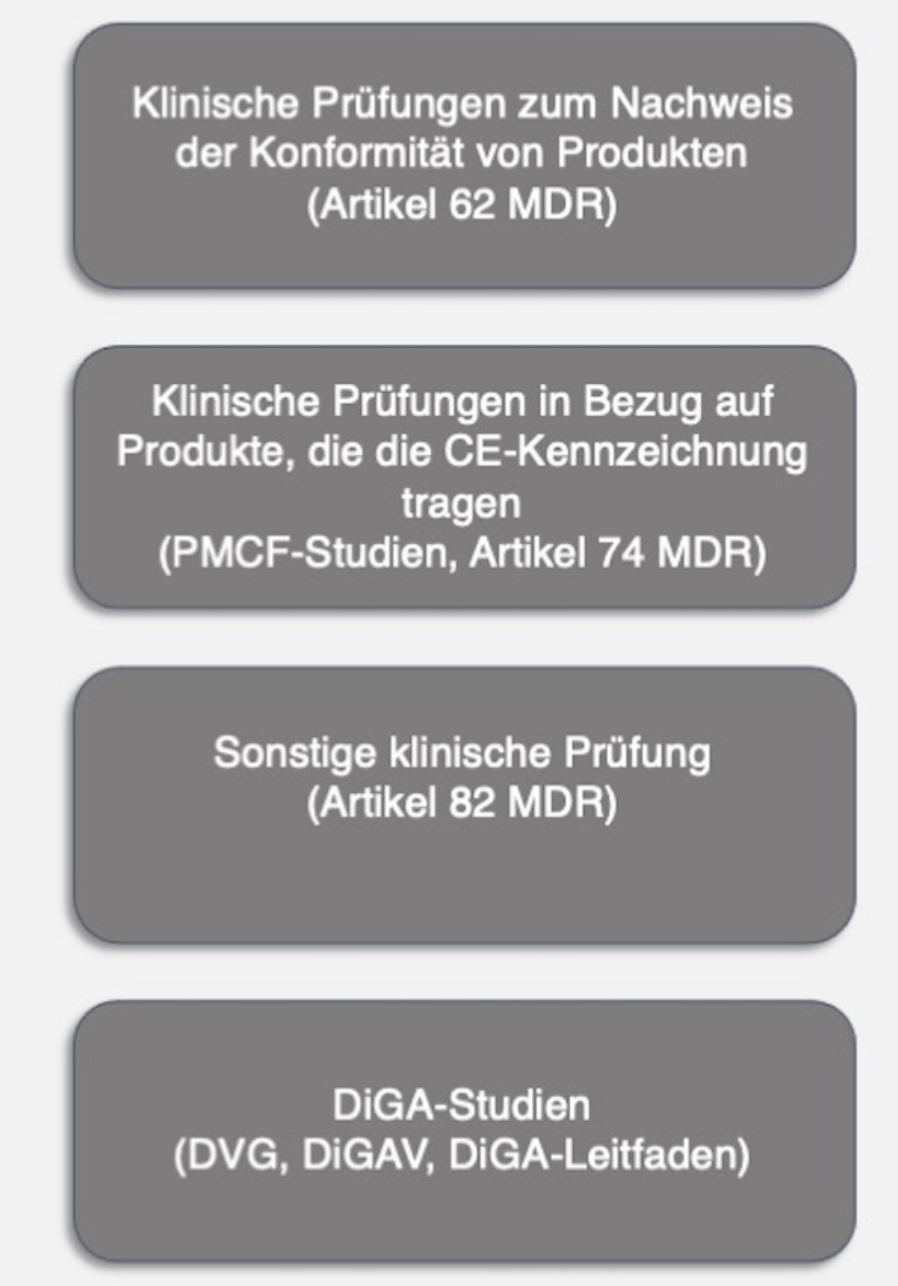
Figure 1: Different types of clinical trials
These different types differ in terms of the respective regulatory requirements, the approval procedures at the higher federal authority (BOB) and the Ethics Commission (EK) and the timing of implementation. This is briefly presented in the following subsections.
2.1 Clinical trials to demonstrate product conformity
The clinical test to prove the conformity of products is the classic approval study. It is regulated in Article 62 of the MDR and, with regard to national requirements for the start and significant changes and corrective measures, in Section 2 of the MPEUAnpG and here in particular in Subsection 1 in Sections 31 to 46.
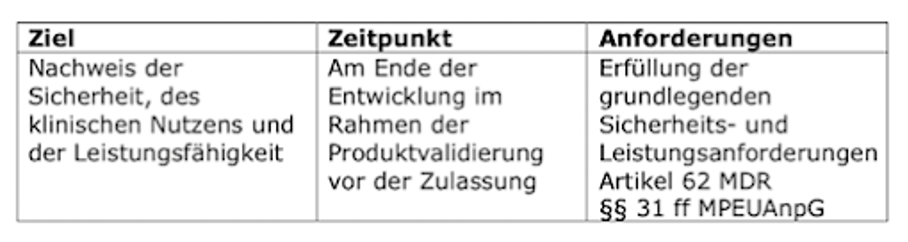
Table 1: Objectives and timing of clinical trials to demonstrate product conformity
2.2 PMCF studies
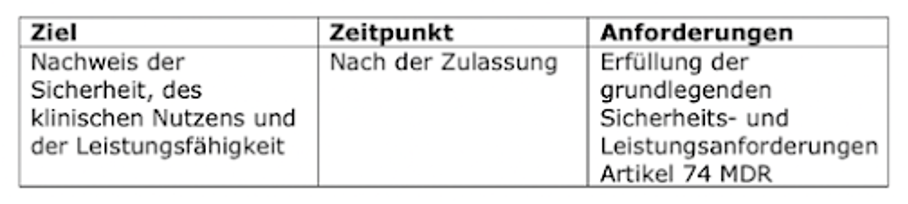
Table 2: Objectives and timing of clinical trials related to products bearing the CE mark
Part of the PMCF studies are regulated in Article 74 of the MDR and are clinical trials carried out on a CE marked product: clinical trials related to products bearing the CE marking . However, the MDR in Article 74 only covers two specific cases of such PMCF studies, namely those that contain additional stressful examinations (Art. 74(1)) and those that are carried out outside the intended purpose of the medical device (Art. 74(2). )).
PMCF studies within the intended purpose and without additional burdensome examinations are regulated nationally.
2.3 Other clinical trials
Other clinical trials are regulated in Article 82 of the MDR and in Chapter 4, Subsection 2, § 47 to § 61 of the MPEUAnpG (Medical Devices EU Adaptation Act).
In Section 3 Sentence 4 of the MPEUAnpG it is defined as follows:
"[...] a clinical trial that
a) is not part of a systematic and planned product development process or product observation of a current or future manufacturer,
b) is not carried out with the aim of demonstrating the conformity of a product with the requirements of Regulation (EU) 2017/745,
c) serves to answer scientific or other questions and
d) takes place outside of a clinical development plan in accordance with Annex XIV Part A Number 1 Letter a of Regulation (EU) 2017/745."
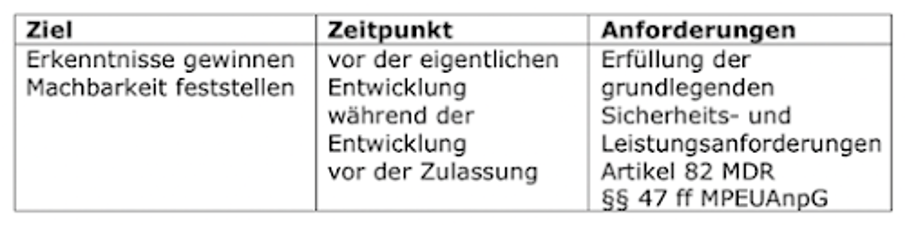
Table 3: Aims and timing of other clinical trials
2.4 DiGA studies
The area of DiGA studies (studies for digital health applications - DiGA) is a national special case.
According to the Digital Care Act (DVG), those insured under statutory health insurance are entitled to receive treatment with DiGA, which can be prescribed by doctors and psychotherapists and is then reimbursed by the health insurance company.
The prerequisite for this is that the DiGA have successfully completed a review process at the BfArM and are listed in a directory for these reimbursable digital health applications (DiGA directory). In order to include a DiGA in the DiGA directory, the positive care effect must be proven in a controlled study in accordance with the DiGA Ordinance This is usually carried out with a CE-marked product. However, it can also be carried out as part of the approval, but then it must meet the requirements for this study according to the DiGA guidelines .
2.5 Outlook
In the next blog post we will first go into detail about the “ other clinical trials ” that are now regulated by the MDR.
3. How we can help you
At medXteam we clarify whether and if so which clinical trial needs to be carried out under what conditions and according to what requirements during the pre-study phase: In 3 steps we determine the correct and cost-effective strategy in relation to the clinical trial required in your case Data collection.
Do you already have some initial questions?
You can get a free initial consultation here: Free initial consultation